HOSHIZAKI CORPORATION (Head office: Toyoake City, Aichi; President & CEO: Yasuhiro Kobayashi; hereafter “Hoshizaki”) has developed its first ice slurry refrigerator. This product cools drinks such as sports drinks to a supercooled liquid state that produces a flowable suspension of fine ice crystals when their containers are subjected to an impact. The ice slurry refrigerator uses a natural refrigerant1. Hoshizaki will start selling the product from October 29, 2026 through its sales companies.
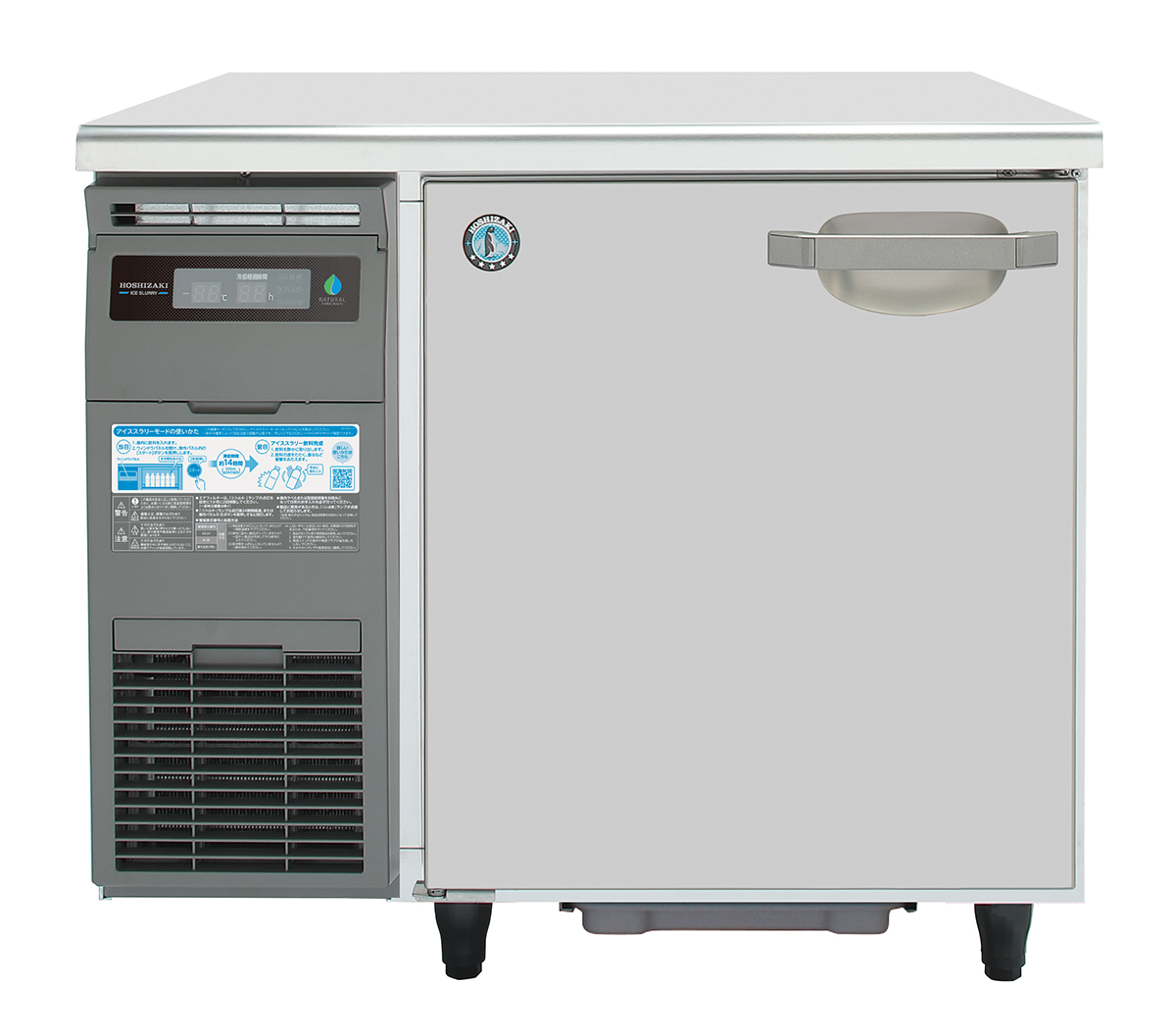
Use of Ice Slurry to Prevent Heatstroke
Against the backdrop of recent extreme heat and mandatory workplace heatstroke prevention measures2, organizations are taking action to prevent heatstroke in a variety of settings, including in factories, construction sites, offices, and schools, as well as at sports events. Given that in 2025 the number of people in Japan transported to hospital by ambulance due to heatstroke rose to 100,5103, the highest ever, even greater efforts are needed to improve heatstroke prevention measures.
Hoshizaki is working to address social challenges by developing products that benefit from the application and advancement of its refrigeration technology cultivated over the years, as well as feedback from customers. In one such initiative, Hoshizaki focused on ice slurry as a means of preventing heatstroke.
Ice slurry refers to a flowable mixture of fine ice crystals and liquid. When people consume such ice slurry, it serves as “drinkable ice” that is easier to swallow than regular ice and colder than water. It cools the body efficiently by making use of two types of heat transfer: the absorption of sensible heat by cold water, and the absorption of latent heat as the ice melts. As a means of preventing heatstroke, ice slurry can be used to precool a worker’s core body temperature prior to starting work, thus limiting the rise in body temperature while working.
Pharmaceutical Refrigerator Technology Applied to Develop Hoshizaki’s First Ice Slurry Refrigerator
Several methods exist for producing ice slurry; Hoshizaki adopted the supercooling method, in which a liquid is cooled inside the refrigerator to a supercooled state without forming ice crystals. After the liquid is removed from the refrigerator, an impact, such as tapping the container, triggers the formation of ice slurry.
To convert liquid into a supercooled state, the temperature within the refrigerated cabinet must be kept stable within plus or minus 1℃ of the preset temperature. Hoshizaki achieved this by applying its technology cultivated in the development of pharmaceutical refrigerators, which require strict temperature control, limiting temperature variation within the refrigerated cabinet to a third or less of that of its standard refrigerators.
Easy to Install Even in Small Spaces; Can Also Be Switched to Refrigerator Mode
The ice slurry refrigerator is 90 centimeters wide—around the size of a small desk—making it easy to install even where space is limited. It takes around 14 hours4 to cool 60 plastic bottles containing 500 milliliters (ml) of liquid each to a supercooled state in which ice slurry can be produced. It is operated simply by placing plastic bottles of drinks inside the refrigerated cabinet and pressing the start button, then waiting the required amount of time for the drinks to cool. A range of commercially available soft drinks in liquid form including sports drinks can be converted into ice slurry.
Additional features of the ice slurry refrigerator are detailed below.
- The display panel shows the elapsed cooling time, allowing users to see at a glance how many hours the drinks have been cooled, without the need to keep separate records.
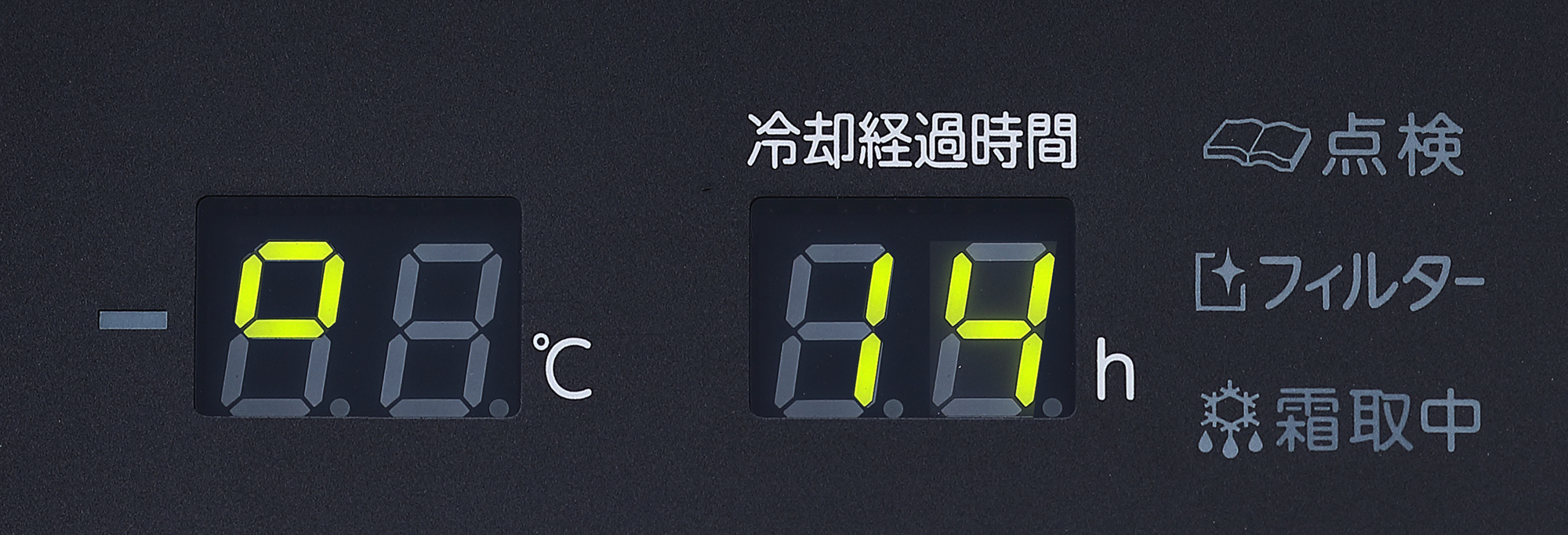
(left: small square moves to indicate that cooling is underway; right: elapsed cooling time)
- The ice slurry refrigerator is equipped with a defrosting function unique to commercial refrigerators. The wastewater that results from defrosting is collected in a tray, avoiding the need for drainage works.
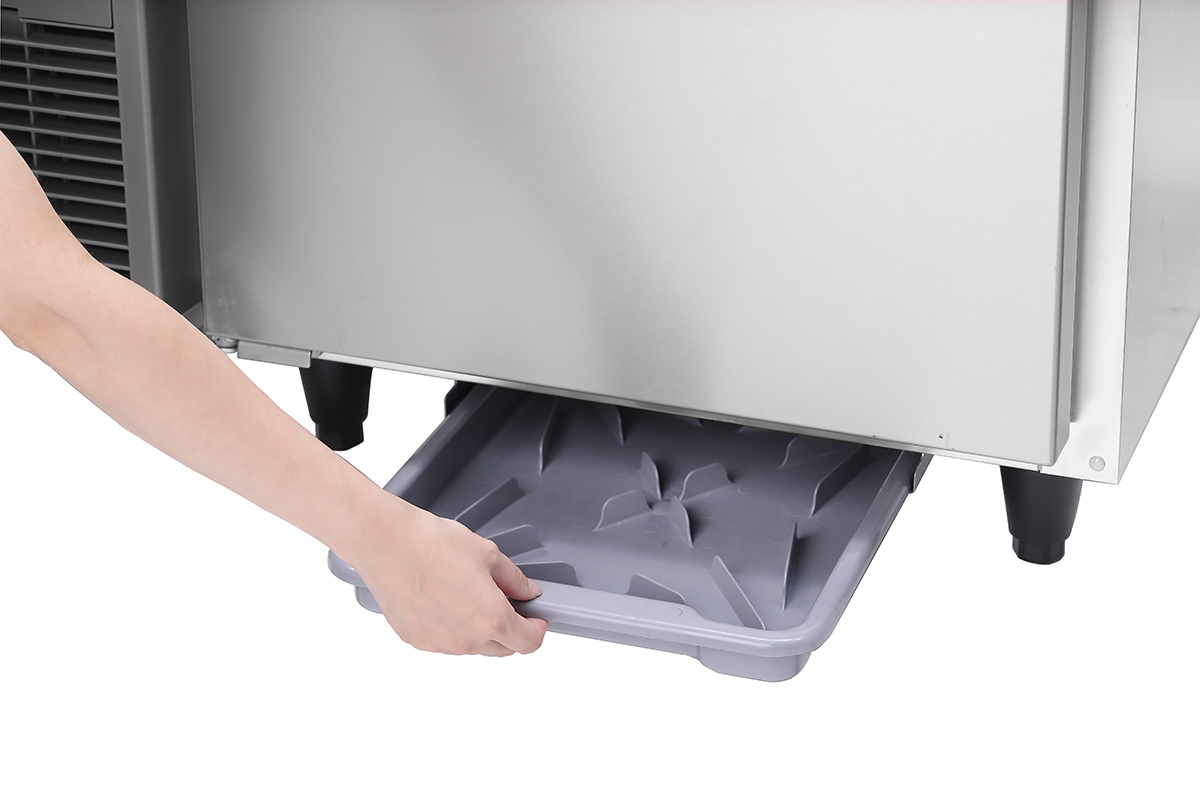
- The operating mode can be switched, enabling the ice slurry refrigerator to be used as a regular refrigerator. Thus, its function can be adjusted for different purposes, including use as a refrigerator during winter, when ice slurry is not required.
- Use of a natural refrigerant ensures that the ice slurry refrigerator’s impact on global warming and the natural environment is minimal, making it an eco-friendly product.
- The ice slurry refrigerator can be installed indoors where the ambient temperature is between 5℃ and 40℃, allowing it to be used even in environments that are hot in summer.
Lineup
Type | No. of models | Capacity (cooling time) | Dimensions (W × D × H in millimeters) | Rating for internal volume | Refrigerant | Standard price (excl. tax) |
|---|---|---|---|---|---|---|
| Ice slurry refrigerator | 1 | 500-mL plastic bottles 60 bottles (around 14 hours4) 40 bottles (around 12 hours4) | 900×600×800 | 151 liters | Natural refrigerant: R-600a (isobutane) | Open price |
1. Natural refrigerants refer to substances that exist naturally in the environment and are used as refrigerants for freezing and air conditioning. These eco-friendly refrigerants have an ozone depletion potential (ODP) of zero and a very low global warming potential (GWP).
GWP is a value indicating the potential of a greenhouse gas to warm the earth when the value for carbon dioxide (CO2) is set at 1.
The GWP values for the product announced today, along with the sources for those values, are listed below.
● Isobutane (R-600a):
・< 1: United Nations Environment Programme (UNEP)’s 2018 Report of the Refrigeration, Air-Conditioning and Heat Pumps Technical Options Committee (released in February 2019)
・<< 1 (significantly less than 1): World Meteorological Organization (WMO)’s Scientific Assessment of Ozone Depletion: 2022 (released in October 2022)
Because natural-refrigerant products fall outside the scope of Japan’s Act on Rational Use and Proper Management of Fluorocarbons (Fluorocarbon Emissions Control Act), no simplified HFC inspections or leak reports are required, which is also expected to lighten the burden for the businesses that adopt them.
2. Per Japan’s revised Ordinance on Industrial Safety and Health, effective June 1, 2025.
3. The number of people transported to hospital by ambulance due to heatstroke in May to September 2025, published by the Fire and Disaster Management Agency of the Ministry of Internal Affairs and Communications (Japan).
4. The time required for freezing is an estimate and varies according to the ambient temperature, the number of bottles inserted, and other factors.
The information presented here is current as of the time of announcement. Please note that it may differ from the latest information.
Return to list